Dan Peters Designs
Practical software, local-first systems, and repair-minded computing.
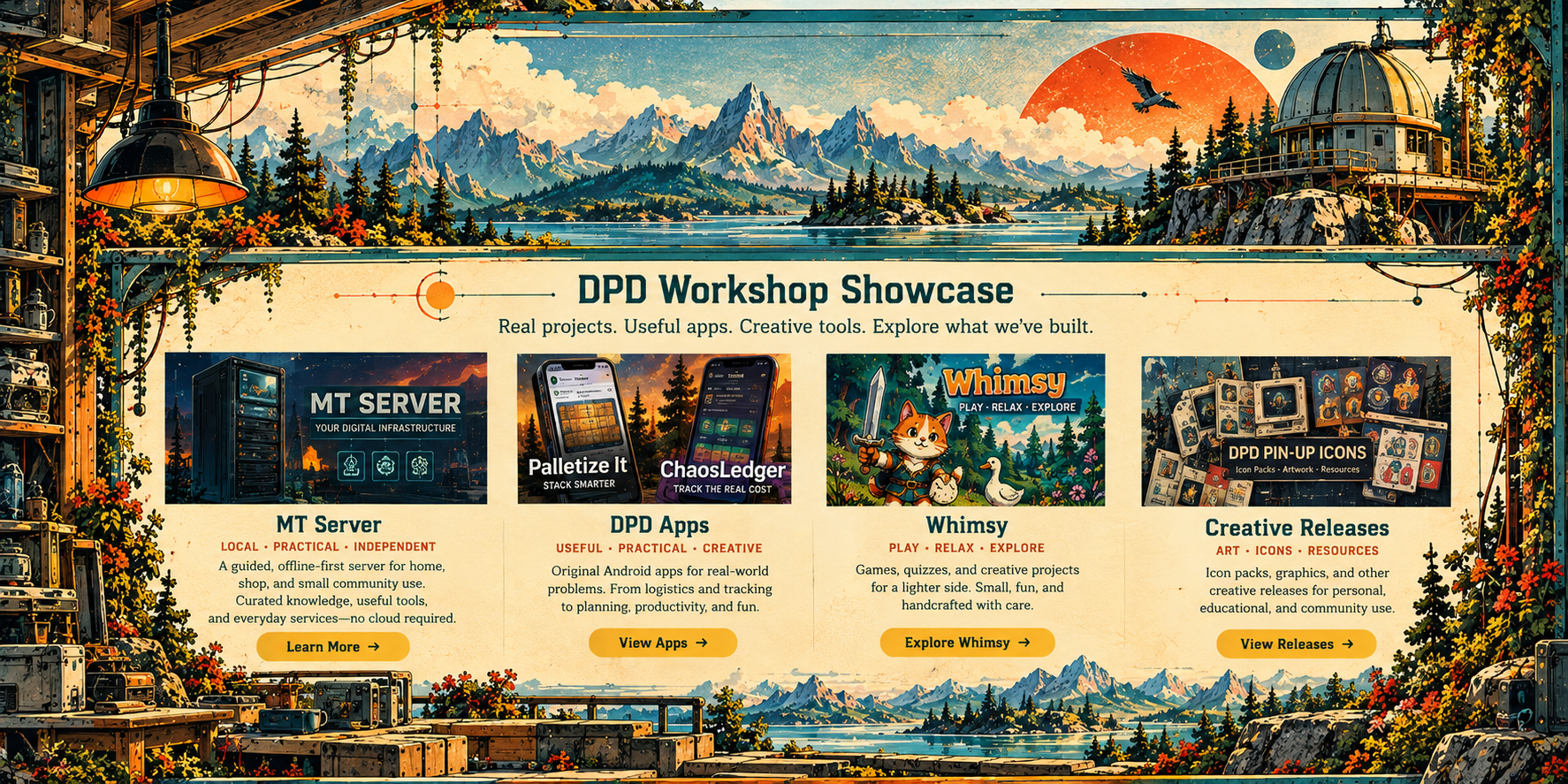
Dan Peters Designs builds practical software, local-first systems, independent-computing resources, and repair-minded projects for people who want to own, understand, and keep using their technology. Current work includes MT Server, DPD Apps, Linux tools, design resources, and documented real-world experiments.
Dan Peters Designs began with a simple habit: taking overlooked hardware, software, and ideas and finding useful new lives for them. What started with custom systems, Linux experiments, graphics, and hands-on repair became a place to share the projects, tools, and lessons learned from building things the practical way.
What We’re About
Dan Peters Designs is about keeping useful technology in people’s hands and under their control. That means repairing before replacing, learning how systems actually work, keeping important files and services accessible, avoiding needless lock-in and recurring fees, and sharing what we learn so somebody else can build on it.
We are not trying to turn everyone into a full-time system administrator or convince people to reject every commercial or online service. The goal is simpler: make technology more understandable, more durable, more independent, and more useful to the person who actually owns and relies on it.
- Own what matters: keep control of your files, systems, tools, and the ability to move or restore them.
- Repair what still has value: good hardware should not become waste just because something newer exists.
- Learn enough to make choices: understand the systems you depend on instead of treating them as sealed boxes.
- Share the useful parts: document builds, mistakes, research, costs, fixes, and lessons so the work has value beyond one machine or one person.

What DPD Builds
DPD is a working shop, not a single-product project. The work ranges from Android apps and Linux utilities to MT Server, self-hosted systems, repaired and repurposed hardware, design resources, and the documentation that grows out of actually using all of it.
- Practical software: small tools and apps built to solve real problems without unnecessary subscriptions or accounts.
- Local-first systems: servers, storage, backups, and services designed to keep useful work under the user’s control.
- Repair and reuse: extending the life of good hardware instead of treating every older machine as disposable.
- Creative and technical resources: themes, icons, guides, project notes, and honest writeups of what worked, what failed, and what changed.
The common thread is simple: technology should remain understandable, repairable, movable, and useful to the person who owns it. DPD does not treat “newer” as automatically better, or “cloud” as automatically easier. If a simpler local tool, repaired computer, or self-hosted service does the job well, that is worth building around.

Knowledge, Learning & Preservation
A big part of DPD is not a product at all. It is the work of learning, documenting, preserving, and passing useful knowledge along.
- Learning in public: Novice to Knowledge follows real learning paths through articles, videos, documentation, experiments, and hands-on milestones.
- Project knowledge: guides, field notes, release notes, build records, troubleshooting, and postmortems preserve what was learned while doing the work.
- Research and reference: DPD collects useful technical, historical, practical, and background material that helps people understand a subject instead of just following instructions.
- Offline preservation: the MT Open Knowledge Library packages books, manuals, primary documents, and reference works so they can be kept, copied, archived, and used without depending on a permanent internet connection.