

Following the industrial discipline of the [Heidelberg Years], the mission of Dan Peters Designs underwent a significant environmental shift.
While many knew Dan Peters Designs for precision manufacturing, the decade and a half between 1990 and 2005 saw a pivot into the logistics of outdoor endurance and recreational infrastructure. This was the “Outfitter Era,” where the focus shifted from the workbench to the wilderness across a three-state area.
The “Ready-to-Go” Philosophy As an avid backpacker and tent-hiker, the philosophy was simple: accessibility through preparation. Realizing that the barrier for most people was the cost of gear, Dan began curating complete, color-coordinated backpacking kits sourced through meticulous scouting of thrift shops and garage sales.
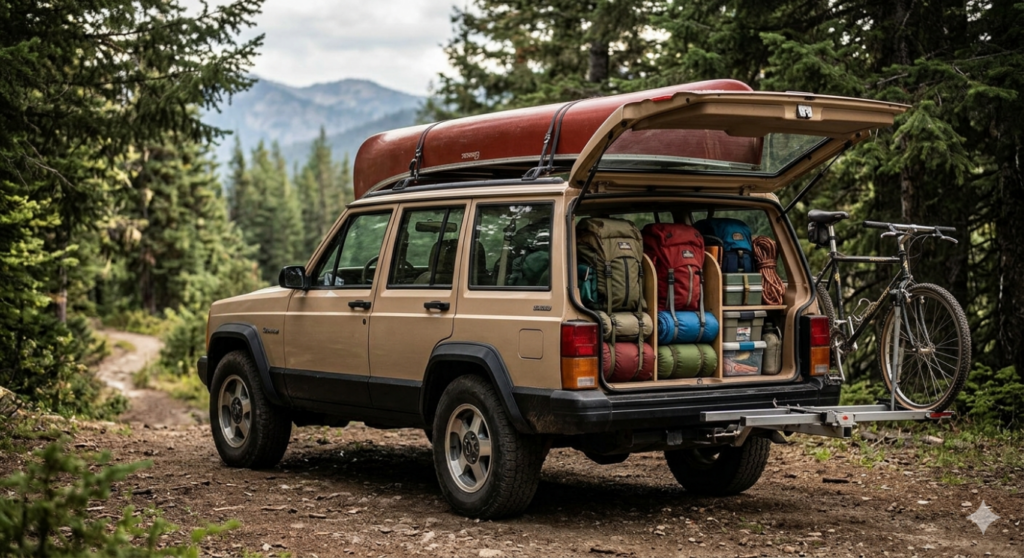
- The Jeep Stack: At any given time, six fully outfitted packs—complete with tents, sleeping bags, mess kits, and survival necessities—lived in the back of a Jeep, alongside a kayak and canoe. It was a “turnkey” camping experience; all the guests had to bring were their clothes.
Consulting & Design This hands-on experience led to a specialized consulting arm for DPd. During this time, the firm designed private campgrounds for clients and friends, focusing on site layout and outdoor recreation gear optimization.
Niles Canoe and Outfitting The era culminated in the acquisition of Niles Canoe and Outfitting from a close friend. This wasn’t just a business move; it was a total immersion into river management. Serving as the manager, instructor, and ranger for 28 miles of wild, protected river, the work involved:
- Logistics: Coordinating tours for groups ranging from 20 to 150 people, many of whom were first-time paddlers.
- Maintenance & Rescue: Operating as the primary driver, landscaper, and swift water rescue lead for the protected corridor.
It was intended to be the “retirement” chapter—a life of river management and outdoor education—until the calling of the printing industry pulled the trajectory back toward the pressroom. But the lessons of that era remain: if you want to go deep into the wild, you build the infrastructure to get there first.
[…] Building on the [Outfitter Era] logistics, NCO became the testing ground for real-world river manage… […]
[…] Infrastructure for the Chosen Family Just as the Outfitter era was about providing gear for those who needed it, the current Home Node project is about providing […]
[…] From the hum of the press room to the roar of the river—follow the journey into the [Outfitter Era]. […]